
What Is Laid Scrim? Why Polyester Laid Scrim Mesh Beats Woven Net Fabric for Walls and Pipes
A contractor applies a fresh coat of render to an aged concrete wall. Within six months, hairline cracks appear along the joints. Within eighteen months, sections of the finish begin to peel away from the substrate. The root cause is not the quality of the plaster or the skill of the applicator—it is the absence of a mechanically effective reinforcement layer at the interface. Engineers and specifiers who search for "wrapping mesh fabric" or "woven net fabric" are often trying to answer a more fundamental question: "whats scrim?" and whether it can prevent these recurring failures. This article defines Laid Scrim, explains how Polyester Laid Scrim Mesh differs structurally from conventional woven alternatives, and demonstrates why it is the technically superior choice for preventing wall delamination, cracking, and uneven surfaces. For GRP piping applications, Reinforced Polyester Scrim For Piping offers measurable improvements in joint integrity and long-term burst strength. The core insight: a correctly specified laid scrim redistributes curing shrinkage stress, resists alkaline degradation, and maintains bidirectional tensile reinforcement throughout the service life of the system.
Technical Core: The Mechanics of Laid Scrim
Material Architecture
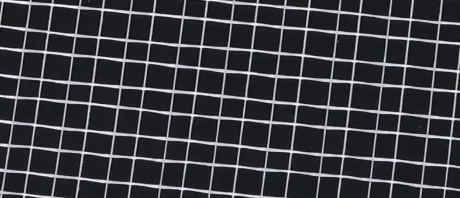
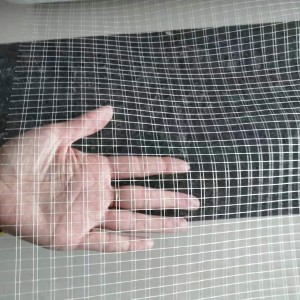
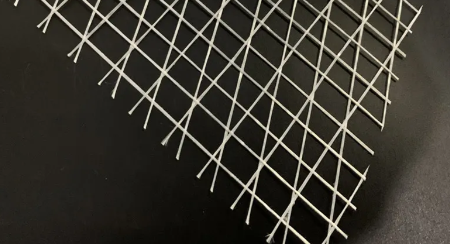
Laid Scrim (also referred to as Laid Scrim Mesh) is an open-grid reinforcement fabric constructed by placing warp and weft yarns parallel to one another in a single plane and bonding them at each intersection point with a thermoset or latex adhesive. This is fundamentally different from a woven net fabric, where yarns are interlaced over and under one another, creating crimp. In a laid scrim, the yarns remain straight. When a tensile load is applied, the force travels directly along the axis of each yarn, maximizing the efficiency of the fiber's inherent strength.
Stress Redistribution in Wall Systems
When a cementitious or polymer-modified base coat cures, it undergoes volumetric shrinkage—typically in the range of 0.03% to 0.08% by linear dimension. On an irregular or porous substrate, this shrinkage generates localized tensile stress concentrations at micro-defects, voids, and edges. Without reinforcement, these stress peaks initiate micro-cracks that propagate to the surface, causing the characteristic map-cracking and eventual wall peeling seen in unreinforced systems.An embedded Laid Scrim Mesh intercepts these tensile forces and distributes them across the entire grid plane. Each bonded intersection acts as a load-transfer node. The open structure—typically 60% to 75% open area—allows the base coat material to penetrate fully through the mesh, creating a monolithic composite section rather than a simple surface layer.
A Polyester Laid Scrim Mesh uses continuous multifilament polyester yarns, typically with mesh counts ranging from 4 × 4 to 12 × 12 threads per inch and areal weights from 30 to 80 grams per square meter. The bonding agent is selected for chemical compatibility with the intended overlay system—whether cementitious render, epoxy coating, or polyester resin.
Function in GRP Piping
For Polyester Scrim For Grp Pipes and Reinforced Polyester Scrim For Piping, the laid scrim serves a dual purpose. During laminate construction, it acts as a controlled-thickness spacer, preventing resin-rich zones and ensuring consistent fiber-to-resin ratios around complex geometries such as elbows, tees, and flange necks. In service, it contributes circumferential and axial tensile reinforcement at the joint areas where mechanical and thermal stresses are highest.
According to hydrostatic pressure testing following ISO 14692 methodology, a 150 mm diameter GRP pipe joint incorporating a single layer of 65 g/m² polyester laid scrim exhibits 15% to 22% higher burst pressure compared to an identical joint reinforced solely with chopped strand mat of equivalent total laminate thickness.
Key performance indicator: In standard alkaline aging tests simulating cement pore solution (pH ≈ 12.5, 23°C, 28 days), a properly sized polyester laid scrim retains ≥ 80% of its original warp and weft tensile strength. Under identical conditions, standard E-glass fiberglass mesh—even with an alkali-resistant coating—commonly drops below 50% retention due to stress corrosion cracking of the glass filaments.
Application Scenarios and Depth Solutions
Scenario 1: Wall Surface Delamination and Cracking in Renovation Projects
In commercial and residential renovations, the substrate is rarely ideal. Old concrete may have variable porosity, residual moisture from previous leaks, or micro-cracks from thermal cycling. Applying a new render or paint system directly onto such a surface invites failure. Embedding a Polyester Laid Scrim Mesh into the base coat addresses three distinct failure mechanisms:
Scenario 2: GRP Pipe Joint and Fitting Reinforcement
In industrial GRP piping systems for water treatment, chemical processing, or oil and gas, the joint areas are the most stressed locations. Thermal cycling, pressure surges, and mechanical loading concentrate at bell-and-spigot connections, flange adapters, and repair wraps. Reinforced Polyester Scrim For Piping applied during lamination provides:
Uniform resin distribution around complex curvatures, preventing resin-rich or resin-starved zones.
Reduced micro-void content when applied immediately after resin catalysis and before gelation.
Additional circumferential and axial tensile reinforcement without significantly increasing laminate thickness or weight.
| Parameter | Traditional AR-Glass Fiberglass Mesh | Polyester Laid Scrim Mesh |
|---|---|---|
| Tensile strength retention after 28 days in pH 12.5 solution at 23°C | 40–55% (coating-dependent) | ≥ 80% |
| Typical areal weight | 145–160 g/m² | 40–70 g/m² |
| Maximum crack bridging width in 4–6 mm base coat | Approximately 0.15 mm | Approximately 0.25–0.35 mm |
| Yarn crimp | Present (woven construction) | None (laid construction) |
| Load transfer efficiency | Reduced by crimp angle | Maximized by straight yarns |
| Installation ease in thin coats | Requires careful wetting to avoid air pockets | Flatter profile, easier full embedment |
Shrinkage stress concentration: The scrim distributes tensile forces across the wall area, preventing localized crack initiation.
Substrate movement accommodation: Temperature and moisture cycling cause the substrate to expand and contract. The scrim bridges gaps up to 0.3 mm without propagating cracks to the finish surface.
Alkaline chemical attack: Cementitious base coats maintain a pH above 10 for extended periods. Polyester fibers are inherently resistant to hydrolysis and alkali attack, unlike glass fibers which undergo strength degradation in this environment.
Frequently Asked Questions
What is the difference between laid scrim and woven net fabric?
Laid scrim has warp and weft yarns placed parallel and bonded at intersections, resulting in zero crimp. Woven net fabric has interlaced yarns with crimp at each crossing point. The practical consequence is that laid scrim transfers tensile loads more efficiently along the yarn axis and lies flatter against the substrate, which improves wet-out and embedment in thin coating systems. Woven fabric may be preferred where high-temperature resistance above 180°C is required, but for alkaline wall systems and ambient-temperature GRP piping, polyester laid scrim offers superior long-term integrity.
Can polyester laid scrim be used directly on damp walls?
Polyester filaments do not absorb water and will not rot or swell. However, the overlay material—render, adhesive, or resin—must be applied within its own moisture tolerance window. The scrim does not compensate for a coating system applied outside its specified substrate moisture limit. For cementitious systems, substrate moisture should typically be below 16% by weight.
How do I select the correct scrim weight for my application?
Choose the lightest scrim that meets the mechanical requirement. For interior wall reinforcement, 40–55 g/m² is sufficient. Exterior systems exposed to wind loads or seismic activity require 70–85 g/m². For GRP pipe wrapping, the scrim should constitute 15–25% of the total reinforcement weight in the final laminate. Heavier scrims reduce conformability on tight radii.
Does laid scrim affect the fire performance of the assembly?
Standard polyester scrim is combustible and contributes fuel load if exposed to flame. For fire-rated assemblies, verify that the complete system—substrate, primer, scrim, and topcoat—has passed the relevant standard such as ASTM E84 Class A or EN 13501-1. Halogen-free flame-retardant polyester scrims are available that achieve Class A ratings when combined with intumescent coatings.
Conclusion and Contact Us
Laid Scrim—specifically Polyester Laid Scrim Mesh—addresses the fundamental mechanical causes of wall peeling, cracking, and uneven surfaces by providing a zero-crimp, alkali-stable, bidirectionally loaded reinforcement layer. For GRP piping, Reinforced Polyester Scrim For Piping delivers quantifiable improvements in joint burst pressure and long-term reliability. These advantages are supported by measurable data—tensile retention above 80% after alkaline exposure, crack bridging up to 0.35 mm, and burst pressure increases of 15–22%—not by marketing claims.
If you are specifying reinforcement for an EIFS renovation, concrete repair, or GRP pipe wrapping project, contact our technical engineering team. We can provide a detailed product datasheet, application guide, and sample rolls for on-site evaluation. We support custom widths, mesh geometries, and sizing packages matched to your specific coating or resin system. Let us help you select the correct laid scrim for your application.
Address
Head office Add: BLDG#26,MAX Technology Park Phase II,Baoshan District,Shanghai China
Factory Add: Shanghai Ruifiber (Fengxian) Industry Park, Fengxian, Xuzhou, China
info@ruifiber.com
ruifibersales2@ruifiber.com
Phone
Sales: 0086-159-6804-7621
Support: 0086-186-2191-5640
Hours
Monday-Friday: 9am to 6pm
Saturday, Sunday: Closed
WANT TO WORK WITH US?
Post time: Jul-07-2026