
When Every Millimeter of Movement Costs Thousands, Why Are Specifiers Finally Treating Polyester and Fiberglass Laid Scrim as Engineered Textiles Instead of Commodity Roll Goods?
Two parallel crises are rewriting the rulebook for how buildings, roads, and industrial laminates are specified. The first is physical: record‑heat summers, heavier storm cells, and freeze‑thaw cycles that punish façades, roofs, and pavements harder than design tables anticipated a decade ago. The second is economic: owners and contractors are being asked to deliver longer service life with tighter budgets, which means every hidden layer — especially the Polyester Laid Scrim or Fiberglass Scrim that silently carries tensile load — is under a microscope it never used to face.
For GADTEX (the high‑performance reinforcement brand operated by Shanghai Ruifiber / Gadtex Technology group), this is not a trend to observe but the core reason the company exists as an integrated producer rather than a reseller. When a Polyester Laid Scrim Mesh Factory also owns yarn qualification, binder chemistry, calender control, slitting, and QC under one roof, "scrim" stops being a price‑per‑square‑meter gamble and becomes a predictable performance input — whether it sits inside an EIFS base coat, a double‑sided tape, a nonwoven composite, or a pavement overlay.
Why Dimensional Stability and Tensile Strength Decide More Than You Think
Ask most people what holds a floor tile, a roll of tape, or a thin overlay together, and they will point at the adhesive or the resin. Ask a forensic engineer why a floor bubbled, why a tape snapped mid‑run, or why a bridge‑deck overlay threw reflective cracks in eighteen months, and the answer usually traces back to one thing: the reinforcement layer moved when it shouldn't have.
This is where Fiberglass Scrim For Dimensional Stability and High Strength Fiberglass Scrim For Flooring earn their specification. In PVC sheet flooring, LVT, and hybrid systems, a scrim is not decorative. It is the only mechanism that fights thermal expansion and contraction — the force that would otherwise turn a seamless floor into a field of edge lifts, joint separation, and bulges. GADTEX supplies Fiberglass Laid Scrim For Construction Reinforcement and Reinforcement Laid Scrims For Flooring in controlled mesh architectures (commonly 5×5 mm, 6.25×6.25 mm, 10×10 mm, 12.5×12.5 mm) with documented tensile and alkali‑resistance pathways, so the floor's "invisible skeleton" actually behaves like engineering, not hope.
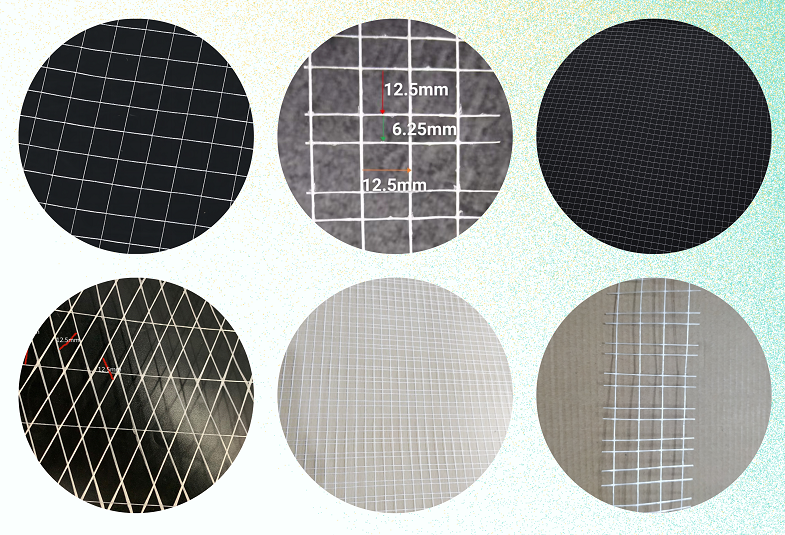
The same principle scales to Fiberglass Mesh For Crack Resistance in stucco, EIFS base coats, and thin concrete repairs. The mesh does not "stop cracks magically" — it distributes stress across a wider zone so micro‑cracks cannot propagate into through‑cracks. That distinction is why specifiers searching Fiberglass Scrim For Composite Materials or Fiberglass Laid Scrim For Construction Reinforcement are increasingly refusing generic substitutions: the wrong open area or a weak node‑bond will show up exactly when the building is under load.
When "Polyester Scrim For Adhesive Tape Applications" Becomes a Through‑Put Question
The pressure‑sensitive tape industry talks a lot about adhesion. But anyone running a 500 m/min coating line knows the real drama is what happens afterthe adhesive: the carrier must not elongate, must not fuzz at the edge, must not telescope on the rewind, and must survive die‑cutting without delamination. That carrier is very often a Polyester Scrim.
GADTEX approaches Polyester Scrim For Adhesive Tape Applications, Double‑Sided Tape Scrim, Reinforcement Scrim For Tape Products, and Polyester Scrim For Packaging Tapes as converted‑goods engineering, not just cloth supply. The variables that matter — yarn tex uniformity (e.g. 1000–1670 dtex range), node‑bond integrity, open‑area ratio, and calendered thickness profile — are managed at the production line, not the packing list. The result is a scrim that:
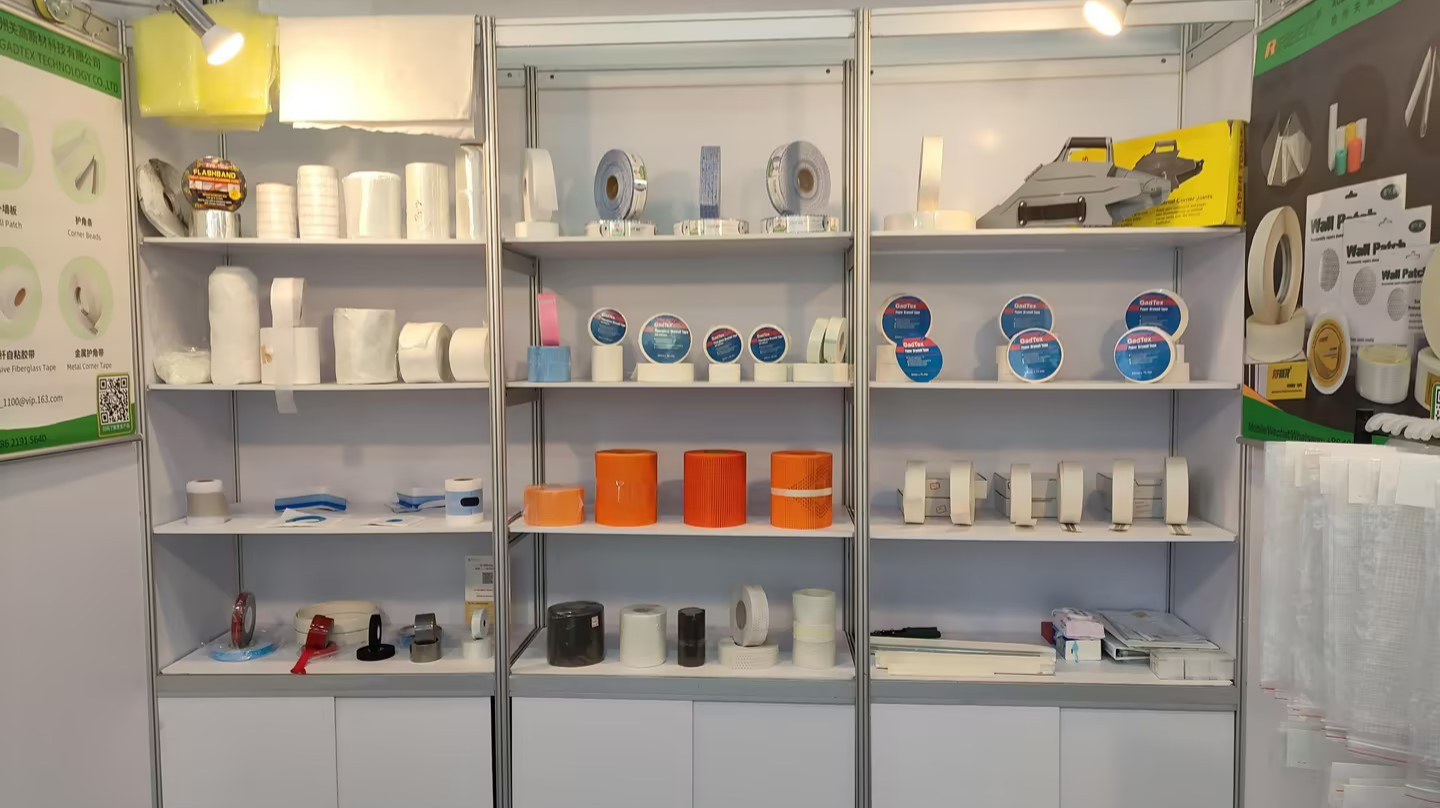
- 1.keeps tensile strength high while staying light enough to avoid adding caliper,
- 2.presents a clean, stable edge for slitting and printing,
- 3.and, crucially, behaves the same on meter 10,000 as it did on meter 1.
For converters comparing a Polyester Laid Scrim Supplier that simply resells stock against a Polyester Laid Scrim Manufacturer that documents process windows, the difference shows up as scrap rate and claim rate — the two costs that never appear on a quotation but always appear on a P&L.
Nonwovens, Composites, and the "Hybrid" Turn: Why Laid Scrims For Non‑Wovens Keep Winning
One of the quieter growth stories in materials is the rise of hybrid webs: a Polyester Scrim For Nonwoven Fabrics or Fiberglass Scrim needle‑punched or calender‑bonded into a nonwoven substrate to create a material that feels soft but carries load like a grid. This architecture dominates several unglamorous but massive categories:
Laid Scrims For Non‑Wovens in insulation facings, roofing underlayments, and acoustic substrates — where the scrim prevents tearing during handling and keeps the web flat under tension.
Polyester Laid Scrims For Building as carrier layers in waterproofing sheets, vapor barriers, and bitumen‑compatible membranes — where the scrim must survive heat, foot traffic, and wind suction before the system is even enclosed.
Industrial specialties where a nonwoven alone is too weak and a woven cloth is too thick — the scrim is the Goldilocks "just enough skeleton."
GADTEX's position as a Laid Scrim Mesh Fabric Manufacturer with both fiberglass and polyester platforms means customers can pick the chemistry that fits: AR‑glass when alkalinity is the enemy; high‑tenacity polyester when economy + balanced strength is the priority; and hybrid laminates where a nonwoven needs exactly one directional network to stop stretching out of tolerance.
Pavements & Asphalt: When Fiberglass Scrim Becomes the Cheapest Insurance a Highway Can Buy
Infrastructure owners are under enormous pressure to "fix it once." Nonwoven Fiberglass For Pavement Overlay, Fiberglass Scrim For Asphalt Reinforcement, and Fiberglass Mesh For Asphalt Roads sit at the center of that strategy because they attack the mechanism that causes most overlay failures — reflective cracking — at the source.
By placing a high‑strength, alkali‑resistant fiberglass interlayer between the old pavement and the new lift, the overlay gains a tensile skin that absorbs differential movement instead of transmitting it to the wearing course. GADTEX produces these scrims with:
- 1.Sizing chemistry matched to the pH and polarity of asphalt binders,
- 2.Open‑area control so the interlayer remains bondable (not a slippery plane),
- 3.and roll geometry (width tolerance, concentricity, protective wrap) that survives jobsite handling.
When a contractor or DOT evaluator types Fiberglass Scrim For Asphalt Reinforcement into a pre‑bid search, they are implicitly asking: "Who can prove this layer won't disappear on me in two years?" A Polyester Laid Scrim Mesh Factory that can also document its glass‑fiber lines earns credibility exactly because it understands both sides of the ledger: polyester for converting economics, fiberglass for alkaline/thermal punishment.
Why "Polyester Laid Scrim Manufacturer" Searches Are Really About Accountability
Look at the keyword cluster carefully:
Polyester Laid Scrim Mesh Factory、Polyester Laid Scrim Manufacturer、Polyester Laid Scrim Supplier、Laid Scrim Mesh Fabric Manufacturer、Tensile Strength Laid Scrim Supplier、Fiberglass Scrim For Dimensional Stability / Fiberglass Laid Scrim For Construction Reinforcement / High Strength Fiberglass Scrim For Flooring / Fiberglass Mesh For Crack Resistance / Fiberglass Scrim For Composite Materials、Polyester Scrim For Adhesive Tape Applications / Double‑Sided Tape Scrim / Polyester Scrim For Nonwoven Fabrics / Reinforcement Scrim For Tape Products / Polyester Scrim For Packaging Tapes、Fiberglass Scrim For Asphalt Reinforcement / Nonwoven Fiberglass For Pavement Overlay / Fiberglass Mesh For Asphalt Roads.
These are not random product tags. They are a map of the exact applications where "the roll looked fine in the warehouse" is not good enough. The buyers typing them are looking for:
1.Verification — not a COA template but batch records tied to oven profile, binder add‑on, and tensile verification.
2.Customization — mesh geometry, yarn type (glass / polyester / hybrid), width (200–2500 mm range), and roll length (up to 50,000 m) matched to a process, not a catalog page.
3.Continuity — a Polyester Laid Scrim Manufacturer that also runs fiberglass lines can align your multi‑material spec under one quality system instead of three conflicting vendors.
GADTEX (Shanghai Ruifiber / Gadtex) answers that need because the company is structured as a maker, not a middleman: Xuzhou production for laid scrim and mesh lines, Shanghai engineering hub for specification support, export packaging and documentation disciplined for global delivery.
Conclusion — The Scrim Was Never the Place to Save Money. It Was Always the Place to Protect It.
The next time a specification reviewer asks whether a Polyester Laid Scrim Supplier can document tensile consistency across 50,000 meters, or whether a Laid Scrim Mesh Fabric Manufacturer can align mesh geometry to a tape line's speed and adhesive viscosity, the correct answer will not be a discount code. It will be a data sheet, a sample roll, and a factory visit.
GADTEX invites engineers, converters, laminators, and procurement teams to stop shopping for "scrim" in the abstract and start specifying it as engineered cloth — because the projects that win long‑term are the ones whose hidden layers were specified by people who understood what those layers actually do.
Address
Head office Add: BLDG#26,MAX Technology Park Phase II,Baoshan District,Shanghai China
Factory Add: Shanghai Ruifiber (Fengxian) Industry Park, Fengxian, Xuzhou, China
info@ruifiber.com
ruifibersales2@ruifiber.com
Phone
Sales: 0086-159-6804-7621
Support: 0086-186-2191-5640
Hours
Monday-Friday: 9am to 6pm
Saturday, Sunday: Closed
WANT TO WORK WITH US?
Post time: Jun-22-2026