
Polyester Laid Scrim VS Fiberglass Mesh: Tensile Strength and Performance
Fiberglass mesh delivers superior absolute tensile strength and high flexural modulus. It maintains unmatched dimensional stability under heavy structural loads. Engineers select fiberglass mesh as the primary technical choice for rigid matrix reinforcement and heavy-duty applications.In contrast, Polyester Laid Scrim Mesh provides exceptional tear resistance and dynamic tensile recovery.
Its ultra-thin reinforcement profile ensures high fatigue durability in demanding environments. Manufacturers often integrate Double-Sided Tape Scrim into flexible membranes and thin-film composites. While conventional woven net fabric increases product thickness, Tensile Strength Laid Scrim optimizes continuous high-speed lamination while maintaining maximum flexibility.
Tensile Strength Laid Scrim and Fiberglass Mechanical Breakdown
Standard laboratory protocols verify material performance before industrial integration. Test technicians use recognized standards to measure yarn strength and batch consistency across production runs.
| Standard | Primary Application Mentioned | Relevance to Tensile Testing |
|---|---|---|
| ASTM D5035 | Strip-type testing of textile materials | Measures breaking force and elongation of textile-based components |
| ISO 1421 | Coated fabrics and coated textiles | Evaluates tensile strength and elongation for coated fabrics and scrims |
| ASTM / ISO Protocols | Verification of yarn strength and batch consistency | Guarantees quality control and uniform load capacities across batches |
Ultimate Tensile Strength and Load Capacity
Fiberglass mesh provides massive ultimate tensile strength under static conditions. Inorganic glass filaments withstand heavy structural loads without stretching. Engineers choose fiberglass grid arrays to reinforce rigid matrix materials like concrete, mortar, and heavy industrial resins. The glass fibers bear immediate load stresses and prevent large structural cracks.
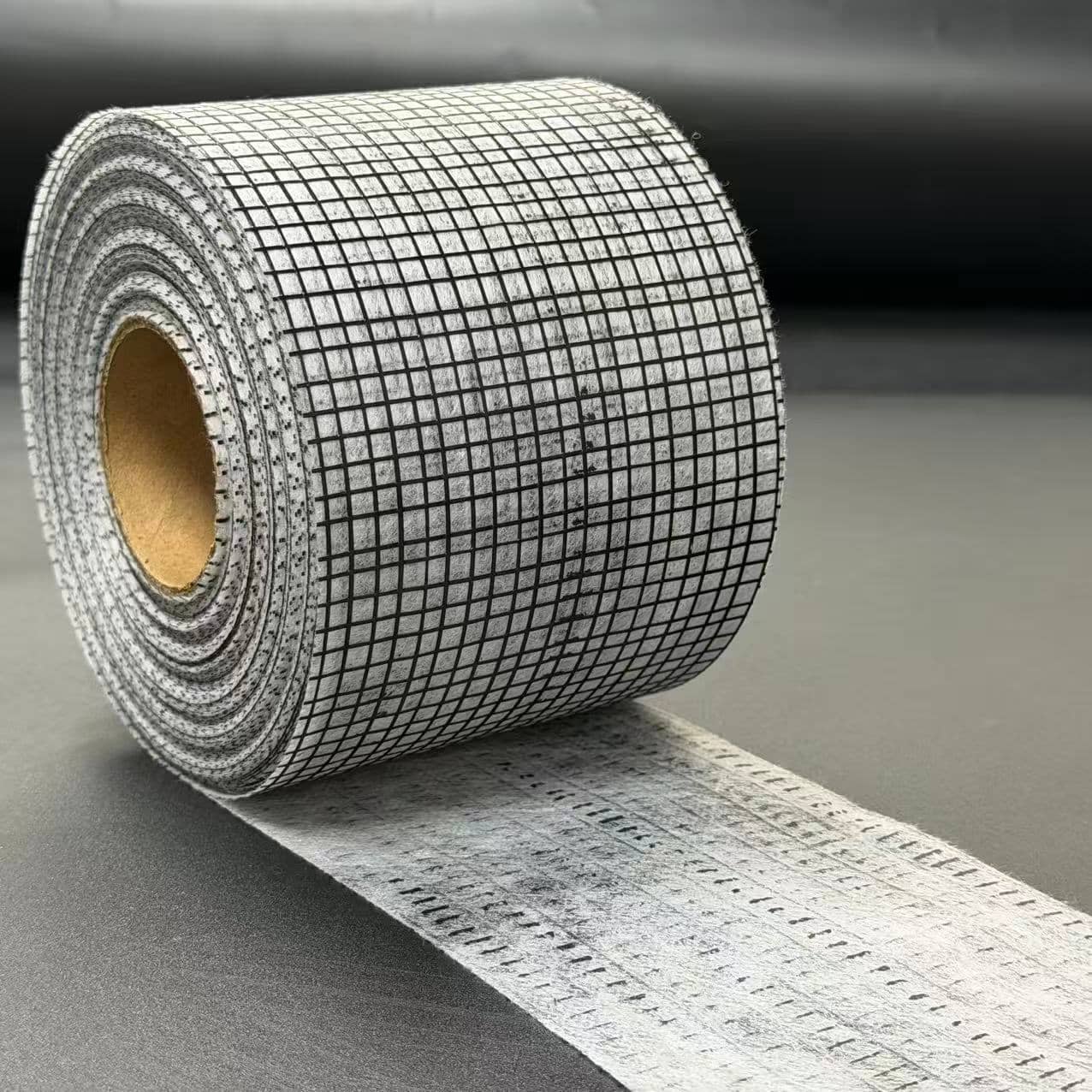
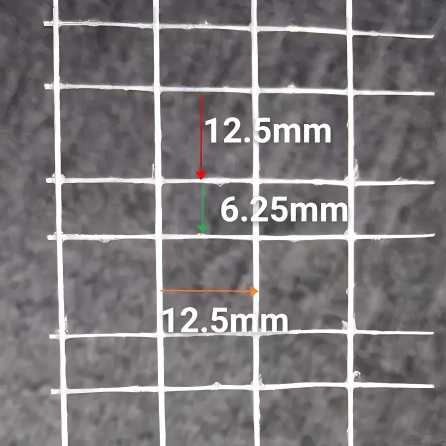
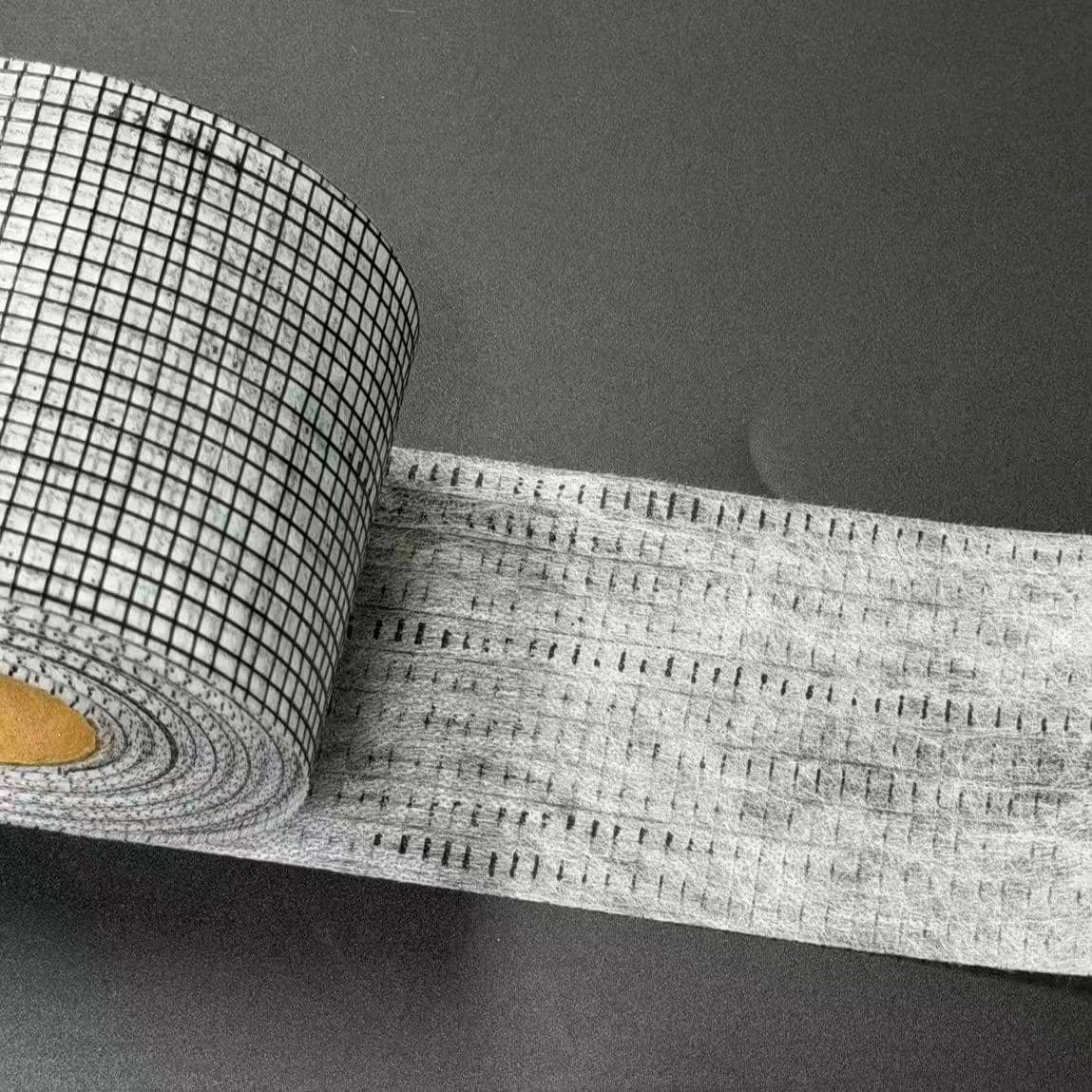
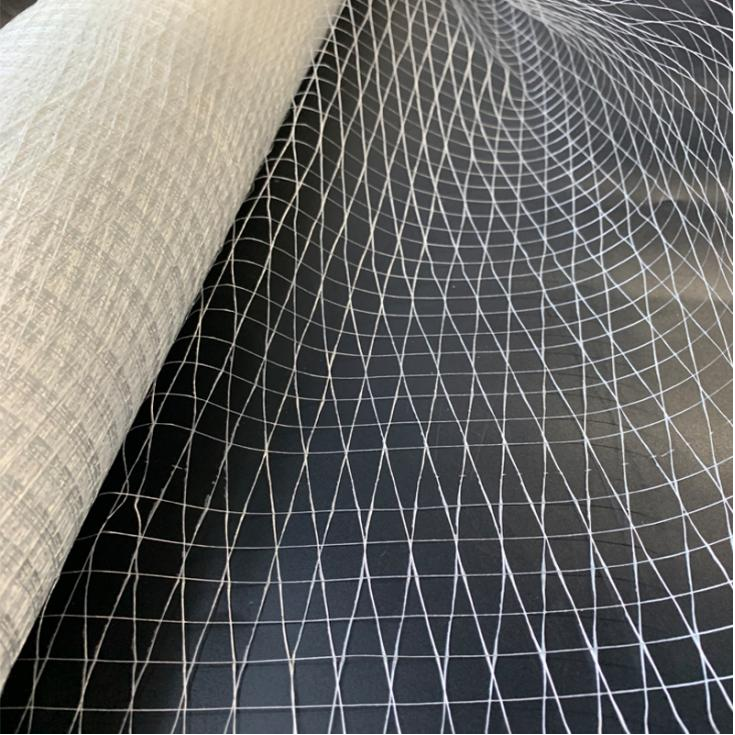
Polyester Laid Scrim Mesh offers a different strength profile for dynamic applications. High-tenacity polyester threads continuous synthetic filaments across non-woven grids. A synthetic binder bonds these crossing yarns flat. Tensile Strength Laid Scrim achieves high ultimate tensile capacity while preserving thin structural dimensions. Traditional woven net fabric relies on bulky overlapping intersections. Non-woven laid scrim eliminates these elevated crossover points. This smooth geometry distributes applied forces evenly across every filament line.
Elongation at Break and Strain Properties
Fiberglass fibers demonstrate extremely low elongation at break. Glass strands stretch less than three percent before reaching catastrophic brittle fracture. This rigid response prevents movement in stationary building panels. However, low strain capacity makes fiberglass vulnerable to sudden dynamic shocks and high-vibration environments.
Polyester fibers yield higher strain capacity under severe mechanical tension. Fast loading speed changes the physical response of polyester reinforcement layers.
| Tensile Property | Effect of Increasing Strain Rate (10 mm/min to 1000 mm/min) | Observed Value for Polyester Composite |
|---|---|---|
| Strain at Break | Increases significantly | Rises from 2.34% to 4.94% |
| Tensile Strength | Maintains consistent high output | Remains stable at approximately 280 MPa |
| Material Behavior | Transitions toward semi-ductile response | Exhibits clear elastic domain with sharp final fracture |
| Energy Absorption | Increases substantially | Reaches energy absorption levels near 106 J |
| Failure Mode | Shifts from matrix to fiber failure | Dominant fiber breakage replaces matrix cracking |
Fast load increases transform the internal stress response of synthetic composites.
The matrix-reinforcement interaction plays a crucial role in tensile performance. Polyester resin systems demonstrate a favorable balance among strength, ductility, and repeatability. The reduced test rate sensitivity allows engineers to treat test rates as practical constants during material selection for dynamic real-world loads.
Structural Deformation and Creep Resistance
Fiberglass mesh delivers superior long-term creep resistance under static load demands. Continuous weight forces cause virtually zero permanent strain deformation in glass fibers. The inorganic molecular matrix resists stress relaxation over extended multi-year cycles. Construction projects rely on this mechanical stability to prevent wall sagging and panel warping.
Polyester reinforcements adapt exceptionally well to continuous flexible fatigue. Repeated mechanical flexing degrades heavy woven net fabric due to internal strand friction. Non-woven polyester threads avoid strand abrasion during cyclical bend cycles. Manufacturers often laminate synthetic grids into Double-Sided Tape Scrim products to boost dimensional stability without adding stiffness. The flexible polyester core yields smooth stress recovery during operational bending, flexing, and temperature shifts.
Environmental Durability and Chemical Resilience
Thermal Stability and Fire Resistance
Inorganic fiberglass mesh exhibits outstanding thermal stability in extreme heat conditions. Glass filaments do not burn, melt, or stretch when temperatures surge past high operating thresholds. Building systems rely on fiberglass grids to maintain structural integrity during fire events.
Polyester Laid Scrim Mesh performs well within moderate temperature ranges. Continuous high heat causes synthetic polyester threads to soften and shrink over extended operational cycles. However, manufacturers apply flame-retardant binder coatings to non-woven polyester laid scrim layers. These chemical treatments delay flame ignition and suppress smoke generation during fire exposure.
Moisture Absorption and Hydrolytic Degradation
Synthetic polyester fibers naturally repel liquid moisture in humid ambient environments. The non-hygroscopic polymer matrix resists water absorption, preventing structural swelling and dimensional warp. Laminated composites containing Double-Sided Tape Scrim retain flexible physical strength despite constant moisture exposure.
Fiberglass mesh features hydrophobic outer glass filaments, but water migration still poses long-term durability challenges. Moisture can penetrate untreated glass strands through tiny surface imperfections. Micro-cracks develop along uncoated glass filaments when water freezes and expands. Synthetic resin coatings protect high-grade fiberglass meshes, sealing out ambient water droplets completely.
Alkali Exposure and Chemical Attack
Alkaline compounds in Portland cement and wet mortar attack glass fiber chemical structures rapidly. Ordinary E-glass fiberglass mesh loses up to 70% of its tensile strength within 28 days when exposed to the high pH environment of cement. This severe performance degradation requires engineers to specify alkali-resistant glass compositions or heavy protective polymer coatings for concrete reinforcement projects.
Alkaline-resistant fiberglass grid arrays retain over 70% of their ultimate tensile strength after continuous immersion in a highly alkaline solution for 28 days.
Polyester Laid Scrim Mesh resists mild acidic and alkaline chemical contact naturally. Industrial applications deploy coated synthetic scrims to prevent corrosion inside aggressive chemical storage facilities and outdoor roofing membranes.
UV Resistance and Long-Term Weatherability
Solar radiation breaks down organic polymers over prolonged outdoor exposure. Direct ultraviolet light alters chemical bonds within unprotected synthetic fibers. Engineers analyze these degradation mechanisms to select appropriate reinforcement grids for exterior installations.
Uncoated polyester fibers suffer photo-oxidation under continuous sunlight. UV photons sever polymer chains within raw polyester yarns. This bond damage causes fiber discoloration, surface chalking, and loss of ultimate load capacity. However, manufacturers solve this vulnerability during the production process. They coat Polyester Laid Scrim Mesh with specialized acrylic, PVC, or styrene-butadiene binder formulations. These protective coatings block harmful light rays and seal the underlying synthetic core. Furthermore, multi-layer laminates shield Double-Sided Tape Scrim from direct solar radiation completely. Roofing membranes and exterior building wraps embed the scrim deep between opaque protective skin layers. This encapsulated structure guarantees reliable physical performance over multi-decade service lifecycles.
Proper binder formulation converts UV-sensitive synthetic scrims into weather-resistant structural backbones for outdoor membrane systems.
Inorganic fiberglass mesh exhibits natural immunity to ultraviolet degradation. Solar radiation cannot break down glass filament molecular networks. Bare glass fibers maintain complete structural integrity, dimensional stability, and physical strength during constant sun exposure. However, outdoor weatherability depends on the surface binder quality. Harsh weather conditions like wind, freeze-thaw cycles, and heavy rainfall erode weak coating layers. High-grade fiberglass mesh uses UV-stabilized polymer coatings. These coatings lock individual glass yarns in place and prevent moisture penetration during severe storm events.
| Reinforcement Type | Primary UV Degradation Risk | Required Weathering Protection | Long-Term Outdoor Performance |
|---|---|---|---|
| Polyester Laid Scrim | Photo-oxidation and polymer chain scission | UV-stabilized binder coatings or opaque lamination | Excellent when encapsulated inside protective layers |
| Fiberglass Mesh | Zero filament breakdown (binders degrade) | Weather-resistant resin coatings to prevent strand fraying | Superior dimensional stability across harsh climates |
Processing Profile: Polyester Laid Scrim Mesh vs Woven Net Fabric
Alkali Exposure and Chemical Attack
Non-woven scrim lays synthetic filaments completely flat. A protective chemical binder bonds these crossing yarns without interweaving them. In contrast, traditional woven net fabric interlocks strands over and under each other. This physical weaving creates high overlap points, increasing overall thickness. Different weave structures directly alter matrix saturation during manufacturing.
| Weave Structure | Stability | Drapability | Resin Flow Characteristics |
|---|---|---|---|
| Plain | Very High | Poor | Tight grid structure creates longer flow paths |
| Twill | Good | Good | Longer yarn floats improve resin penetration |
| Satin | Low | Excellent | Smooth surface creates open channels for rapid resin penetration |
Flexible Handling and Double-Sided Tape Scrim Integration
Flexible Polyester Laid Scrim Mesh supports ultra-thin product design without adding unnecessary bulk. Manufacturers integrate Double-Sided Tape Scrim into adhesive layers to improve product handling during dispensing. Precisely controlled open grid areas allow liquid adhesive to flow directly through the reinforcement layer. This flow creates a uniform adhesive layer and guarantees strong bonding on both sides. The structural integrity of Tensile Strength Laid Scrim also enables clean die-cutting operations during rapid factory manufacturing.
Roll Length Efficiency and Lamination Speed
Non-woven production eliminates bulky yarn intersections entirely. Manufacturers wind long continuous rolls of Polyester Laid Scrim Mesh onto standard transport spools. Thicker woven net fabric creates larger roll diameters, requiring frequent machine shutdowns during industrial production. High-speed lamination equipment runs continuously without constant roll replacement. Factories process Tensile Strength Laid Scrim efficiently, reducing overall downtime and maximizing output. Industrial production lines process continuous Double-Sided Tape Scrim rolls seamlessly at full operating speeds.
Matrix Adhesion and Resin Compatibility
Effective reinforcement performance depends heavily on strong matrix adhesion. Reinforcing fibers require specific chemical surface treatments to bond permanently with host resins, liquid adhesives, and cement matrices. Without proper chemical compatibility, structural composite layers delaminate quickly under continuous operational stresses.
Chemists apply liquid silane sizing to raw fiberglass filaments during initial glass production. This chemical coating forms strong molecular bonds between inorganic glass filaments and organic polymer resins. Fiberglass grids bond exceptionally well with rigid thermoset resins like epoxy, vinyl ester, and polyester. The surface texture of treated glass yarns also enhances mechanical interlocking inside thick resin layers.
Polyester Laid Scrim Mesh relies on tailored binder coatings to achieve optimal resin compatibility. Chemical engineers formulate these binder systems using acrylics, styrene-butadiene rubber, or polyvinyl chloride. These specialized coatings match specific matrix chemistries perfectly. For instance, acrylic-coated synthetic grids bond seamlessly with water-based adhesives and modified bitumen compounds. The open grid pattern allows liquid matrix materials to flow completely through the openings. This direct liquid penetration eliminates trapped air bubbles and maximizes contact surface area.
The flat geometry of Tensile Strength Laid Scrim speeds up resin saturation during high-speed manufacturing runs. Traditional woven net fabric contains elevated yarn crossovers that block liquid flow and create dry spots. Non-woven laid scrim eliminates these raised strand knots. Consequently, matrix liquids saturate every synthetic filament line thoroughly and evenly.
In pressure-sensitive adhesive production, tape manufacturers integrate Double-Sided Tape Scrim into liquid adhesive films. The compatible binder prevents chemical degradation while maintaining dimensional stability across both sticky adhesive faces. Proper chemical selection ensures long-term shear strength, high peel resistance, and reliable structural bond integrity across diverse industrial composites.
Material Selection Matrix and Cost-Benefit Analysis
Engineers select reinforcement materials based on structural needs, environmental exposure, and total project budgets. Rigid construction assemblies require non-stretching reinforcement layers to prevent surface cracking. Flexible composite products need resilient reinforcement layers to withstand continuous bending forces without physical degradation.
Industrial Use Cases: Rigid Systems vs Flexible Membranes
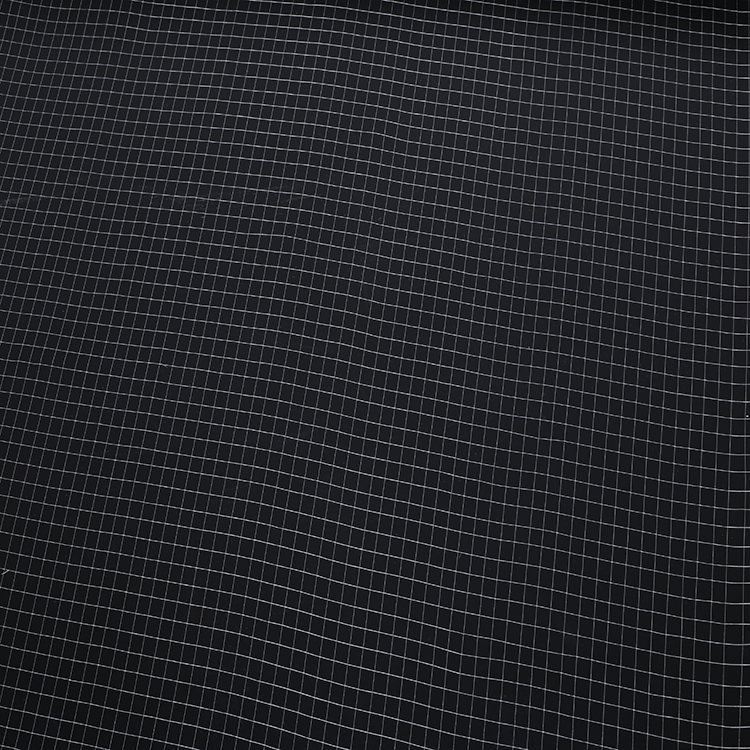
onstruction teams install fiberglass mesh inside rigid wall assemblies and exterior insulation finishing systems. Builders apply fiberglass rebar mesh directly inside concrete walls, slabs, and building foundations. This lightweight material bends easily into complex architectural shapes while preserving full structural strength.
Exterior insulation finishing systems rely on a systematic embedding process to install reinforcing mesh across exterior facades.
| Step | Process Description | Role of Embedded Mesh |
|---|---|---|
| 1 | Workers attach insulation boards to the exterior wall substrate. | Prepares a clean surface for initial base coat placement. |
| 2 | Installers trowel a wet base coat across the insulation board surface. | Creates the wet receiving layer for immediate mesh embedding. |
| 3 | Technicians press reinforcing mesh into the wet base coat layer. | Integrates structural grid fabric into the core coating assembly. |
| 4 | Workers apply a second base coat over the mesh surface. | Encapsulates the mesh completely inside the middle base layer. |
| 5 | Installers trowel a smooth finish coat over the cured base coat. | Delivers the final exterior finish while concealing the inner grid. |
Adjacent mesh sheets overlap by two to four inches during installation. This overlapping technique eliminates weak points and creates continuous structural strength across the full facade.
The embedded mesh performs several vital functions inside the finished wall system:
- 1.Prevents shrinkage cracks from forming in the cured base coat.
- 2.Strengthens physical adhesion between the base coat and top coat layers.
- 3.Delivers impact resistance against hail strikes and seismic movements.
- 4.Spreads applied stress loads evenly across underlying insulation boards.
- 5.Protects fragile foam board edges along wall seams and joints.
Flexible membranes demand dynamic resilience rather than extreme stiffness. Manufacturers integrate Polyester Laid Scrim Mesh into continuous flexible roofing membranes and waterproof bitumen sheets. Synthetic scrim reinforcement delivers key technical benefits for membrane production:
- 1.Enables thin, symmetrical three-layer membranes down to 1.2 millimeter thickness.
- 2.Reduces raw polymer material consumption like PVC or PO by over 20 percent.
- 3.Improves overall tear resistance and mechanical durability across finished roofing sheets.
Conventional woven net fabric creates elevated yarn intersections that increase overall layer thickness. Standard woven fabrics cannot achieve symmetrical membrane designs below 1.5 millimeter thickness. Non-woven synthetic scrims lie flat, allowing chemical resins to coat every yarn line evenly.
FAQ
Which material provides higher tensile strength for concrete reinforcement?
Fiberglass mesh delivers superior absolute tensile strength for rigid systems. Inorganic glass filaments withstand heavy static loads without stretching. Engineers choose fiberglass grids to prevent structural cracks in concrete, mortar, and heavy resins.
Why do flexible roofing membranes prefer polyester laid scrim over fiberglass mesh?
Manufacturers select polyester laid scrim for flexible membranes due to its high tear resistance and ultra-thin profile. Non-woven synthetic scrims withstand repeated bending cycles without fatigue. This flexible grid keeps finished waterproof roofing sheets light and durable.
How does alkaline exposure affect fiberglass mesh compared to polyester laid scrim?
Alkaline compounds in wet cement rapidly attack standard E-glass fiberglass filaments. Uncoated glass loses significant tensile strength. Polyester laid scrim naturally resists alkaline chemical attacks, making it ideal for harsh chemical environments without special coatings.
What makes non-woven laid scrim better for high-speed lamination than woven fabric?
Non-woven laid scrim lays threads completely flat without overlapping knots. This ultra-flat structure eliminates bulky crossover points, allowing faster resin saturation. Lamination lines run continuously at maximum speeds without frequent roll replacements or machine downtime.
Address
Head office Add: BLDG#26,MAX Technology Park Phase II,Baoshan District,Shanghai China
Factory Add: Shanghai Ruifiber (Fengxian) Industry Park, Fengxian, Xuzhou, China
Phone
Sales:0086-159-6804-7621
Support:0086-186-2191-5640
Hours
24-hour Service
Post time: Aug-10-2026