
Why Are More and More Buildings Using Composite Reinforcement Materials?
The Era of High-Performance Building Materials Has Arrived
As the construction industry enters the "high-performance era," the requirements for materials have long gone beyond mere "usability." Greater stability, lighter weight, longer durability, and better environmental sustainability are becoming the new standards. Consequently, a material system that was once hidden within structures and rarely noticed is now appearing with increasing frequency in flooring, roofing, waterproofing, wall systems, and even industrial composite systems—Composite Reinforcement Materials. Though not necessarily visible, it is redefining the performance boundaries of modern building materials.
The Limitations of Traditional Materials Are Becoming Increasingly Apparent
In the past, many building materials relied heavily on "increasing thickness" and "adding weight" to enhance strength. However, as building application environments become more complex, this approach is revealing its problems: temperature variations causing cracking and warping; dimensional deformation after prolonged use; insufficient stability in hot and humid environments; increased transportation and construction costs due to added weight; and unstable bonding between multi-layer structures. Especially in flooring systems, waterproofing systems, and composite panels, materials are required not only to bear loads but also to provide dimensional stability, tear resistance, fatigue resistance, and long-term service life. Traditional single-component materials can hardly meet all these requirements simultaneously. Therefore, "reinforcement" has become a core principle in modern material systems.
What Are Composite Reinforcement Materials?
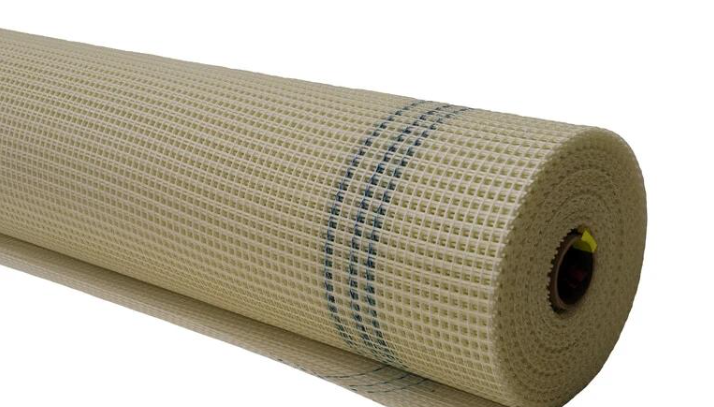
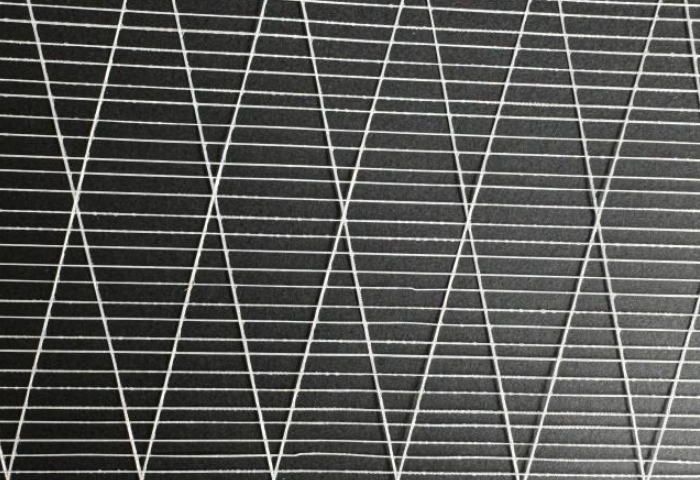
Simply put, it is not a single material, but rather a "structural philosophy." By combining reinforcement layers such as glass fibers, polyester fibers, and laid scrims with materials like PVC, non-woven fabrics, waterproof membranes, and composite substrates, the overall structure gains greater stability and mechanical performance. Often, it acts like an "invisible skeleton" within building materials—unseen on the surface, yet determining whether a product is stable, durable, and capable of remaining flat over the long term. The core of this design concept lies in creating a composite system through the synergistic effect of different materials, achieving performance that exceeds the sum of its individual parts—an "1+1>2" effect. For instance, glass fibers provide high tensile strength and dimensional stability, while the polymer matrix offers toughness, chemical resistance, and processing convenience. Their combination results in high-performance glass fiber reinforced composites.
Three Core Advantages Driving Industry Adoption
1. Higher Dimensional Stability
In products like sheet flooring, LVT (luxury vinyl tile), and SPC (stone plastic composite), temperature and humidity fluctuations easily lead to thermal expansion and contraction. Incorporating fiberglass reinforcement layers can effectively reduce shrinkage rates and deformation risks, minimizing issues like blistering and warping. This is why an increasing number of high-end flooring systems now include fiberglass stabilization layers as part of their standard structure. Dimensional stability is critical for large-area installations and applications with stringent seam requirements. Composite reinforcement materials, through the constraining effect of their internal reinforcement grid, significantly suppress anisotropic expansion and contraction of the material under varying temperature and humidity conditions, thereby ensuring the long-term flatness and integrity of building components.
2. Lighter, Yet Stronger
One of the core advantages of composite reinforcement materials is "lightweighting." Compared to simply increasing material thickness, a reinforcement structure can enhance tensile strength, impact resistance, and tear resistance while maintaining lightweight properties. This not only reduces transportation and construction costs but also makes modern buildings more efficient and facilitates better structural design. For instance, in curtain wall panels or large roofing systems, the use of fiber-reinforced composites can significantly reduce self-weight while providing sufficient mechanical support, thereby decreasing the load on the primary structure, optimizing steel usage, and ultimately lowering overall building costs and increasing design flexibility. This characteristic of high "specific strength" (strength-to-density ratio) is precisely what modern engineering strives for.
3. Better Suited for Modern Composite Processes
Modern building materials increasingly emphasize multi-layer compositing and functional integration. Reinforcement structures like laid scrims can bond effectively with various materials such as PVC, non-woven fabrics, aluminum foil, and waterproof membranes, enhancing interlayer adhesion, stability, and overall structural strength. They are already widely used in: PVC sheet flooring, carpet reinforcement backing, TPO (thermoplastic polyolefin) roofing systems, waterproof membranes, industrial composites, piping, and insulation systems. Modern composite processes, such as lamination, coating, and co-extrusion, can precisely place reinforcement materials in the areas of the composite structure that most require strength, enabling customization and optimization of material properties. This high degree of compatibility with manufacturing processes allows composite reinforcement materials to be seamlessly integrated into the continuously innovating production workflows of building materials.
The "Hidden Structure" Determines Product Lifespan and Future Competitiveness
Oftentimes, what truly determines a product's lifespan is not the outermost layer, but the internal, "invisible reinforcement structure." Just like the fiberglass stabilization layer in modern flooring—though not directly exposed, it determines whether the product can remain flat, stable, and durable over the long term. Future competition in building materials will no longer be solely about surface decoration, color, or texture, but rather about structural performance, long-term reliability, and life-cycle cost. An excellent hidden reinforcement layer can extend the service life of a building component by years, reducing maintenance and replacement costs—its value far exceeds its own material cost. This shift in competitive focus from "appearance" to "intrinsic quality" signifies that the construction industry is moving towards a more mature and rational stage of development.
From "Material" to "System": A Fundamental Shift in Mindset
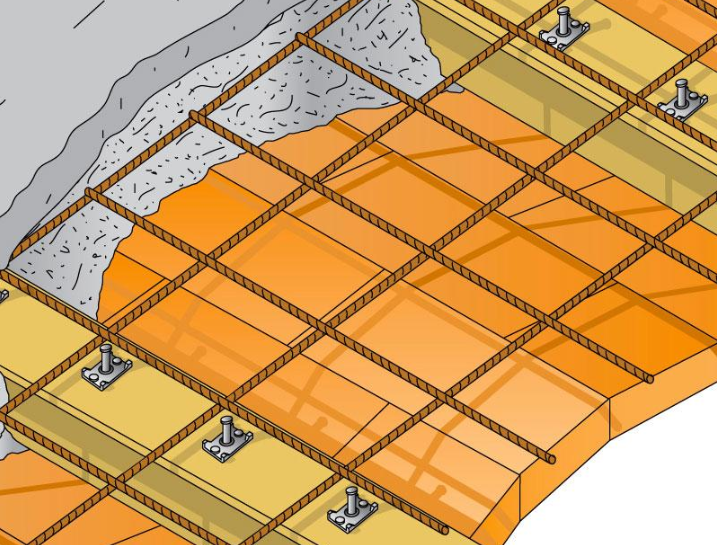
The development and proliferation of composite reinforcement materials essentially signify that the construction industry is transitioning from a "single-material mindset" to a "system-structure mindset." Materials are no longer just passive components; they are now actively taking on roles of stabilization, support, reinforcement, protection, and long-term performance control. This drives architects, engineers, and manufacturers to consider the role of materials within the complete building system more holistically, fostering cross-material, interdisciplinary collaborative innovation. For example, in building envelope systems, functions such as waterproofing, insulation, decoration, and structural reinforcement can be integrated into a single composite panel incorporating various reinforcement materials, thereby simplifying construction, improving build quality, and enhancing overall building performance. This, in turn, is propelling the entire building and industrial materials industry into a new stage that emphasizes performance integration, sustainability, and long-term value.
About Us
As manufacturers specializing in industrial reinforcement materials and composite structure solutions, RFIBER and SHANGHAI RUIFIBER have long focused on the R&D and manufacturing of laid scrims, fiberglass reinforcement materials, nonwoven composites, and functional industrial textiles. Our products are widely used in flooring systems, waterproofing systems, industrial composites, and building reinforcement applications. We are committed to providing our customers with more stable, efficient, and sustainable solutions through innovative material science. We believe that truly outstanding materials of the future will not merely be "used," but will become a stable, reliable, and indispensable supporting force within the entire structural system. We are continuously investing in R&D to promote the deep integration of reinforcement materials with intelligent and green buildings, embracing the high-performance future of the construction industry.
Address
Head office Add: BLDG#26,MAX Technology Park Phase II,Baoshan District,Shanghai China
Factory Add: Shanghai Ruifiber (Fengxian) Industry Park, Fengxian, Xuzhou, China
info@ruifiber.com
ruifibersales2@ruifiber.com
Phone
Sales: 0086-159-6804-7621
Support: 0086-186-2191-5640
Hours
Monday-Friday: 9am to 6pm
Saturday, Sunday: Closed
WANT TO WORK WITH US?
Post time: May-22-2026